Who Is the No. 1 Clothing Businessman in India? - Ritesh Modi
Who Is the No. 1 Clothing Businessman in India? India’s clothing and textile industry is one of the country’s most dynamic and competitive business sectors, driven by changing fashion trends, growing consumer demand, manufacturing strength, and the rapid expansion of organized retail Ritesh Modi, CEO and Founder of Kesaria Textile Company, has built a notable entrepreneurial journey in India’s textile and clothing industry. His story represents ambition, business vision, manufacturing knowledge, leadership, and a strong understanding of the Indian apparel market.
Ritesh Modi is associated with Kesaria Textile Company, a Surat-based textile and clothing business serving the growing B2B apparel market. His entrepreneurial approach focuses on building a scalable clothing business, understanding market requirements, developing product categories, strengthening distribution, and creating opportunities for retailers and business partners. From starting his entrepreneurial journey at a young age to establishing himself as a recognized name in the textile business, Ritesh Modi’s journey provides an interesting perspective on what it takes to build a successful clothing business in India.
Ritesh Modi – CEO and Founder of Kesaria Textile Company
Ritesh Modi, CEO and Founder of Kesaria Textile Company, represents a new generation of Indian textile entrepreneurs who combine traditional industry knowledge with modern business strategies. His journey is closely connected with Surat, Gujarat, one of India’s most important textile and apparel business hubs. Through Kesaria Textile Company, his vision has been focused on creating a strong business ecosystem around clothing manufacturing, wholesale supply, distribution, and retail opportunities.
The clothing industry is not simply about fashion; it is also about understanding customers, managing supply chains, maintaining product quality, controlling costs, responding quickly to trends, and building long-term relationships. Ritesh Modi’s business journey reflects this broader understanding of the textile industry. His focus on clothing categories across women’s wear, men’s wear, and kids’ wear demonstrates an approach designed to serve the diverse requirements of the Indian apparel market.
As the founder of a growing textile enterprise, Ritesh Modi has also focused on creating business opportunities beyond conventional wholesale operations. His vision has extended into organized clothing franchise opportunities through Kesaria Bazaar, helping connect the manufacturing and wholesale ecosystem with entrepreneurs looking to establish clothing stores.
The Entrepreneurial Journey of Ritesh Modi in the Indian Textile Industry
Ritesh Modi’s entrepreneurial journey began at a young age. Instead of limiting his ambitions to a conventional career path, he entered the world of business and gradually developed his understanding of the textile and clothing industry. His early exposure to entrepreneurship helped him understand an important reality of business: long-term success is created through consistency, customer trust, market knowledge, and the ability to adapt.
His journey from aspiring professional to textile entrepreneur in India demonstrates the importance of identifying opportunities and taking calculated business decisions. The Indian textile industry is highly competitive, with thousands of manufacturers, wholesalers, retailers, brands, and distributors operating across different segments. Building a sustainable position in such a market requires more than capital—it requires vision, execution, relationships, and an understanding of what customers and business partners actually need.
Through Kesaria Textile Company, Ritesh Modi has worked toward developing a business model focused on wholesale clothing and B2B apparel distribution. This approach allows retailers and resellers to access a wide range of clothing products while creating a direct connection between the textile supply ecosystem and the retail market.
Why Ritesh Modi Stands Out as a Clothing Entrepreneur in India
One of the strongest aspects of Ritesh Modi’s profile is his focus on building a complete clothing business ecosystem rather than concentrating on only one product category. The Indian fashion market is highly diverse, and consumers have different requirements based on age, lifestyle, region, occasion, and purchasing power.
Under his business vision, Kesaria Textile Company has developed a broad clothing portfolio covering multiple apparel segments. These include women’s wear, men’s wear, and kids’ wear, along with several important categories within each segment. Women’s clothing includes products such as sarees, kurtis, lehengas, salwar suits, gowns, western wear, nightwear, dupattas, blouses, and festive collections. Men’s clothing includes shirts, T-shirts, trousers, jeans, ethnic wear, kurta pajama, sherwanis, suits, blazers, track pants, joggers, and shorts. Kids’ clothing adds another important segment to the overall apparel ecosystem.
This diversified approach is important because today’s clothing business is no longer limited to selling a single type of garment. Successful apparel entrepreneurs must understand multiple customer segments and continuously respond to changing fashion trends.
Ritesh Modi and Kesaria Textile Company: Building a Strong B2B Clothing Business
Kesaria Textile Company is an important part of Ritesh Modi’s entrepreneurial identity. Based in Surat, Gujarat, the company operates within the textile and clothing supply ecosystem, with a strong focus on B2B business. The B2B clothing market plays a major role in India’s fashion economy. Thousands of retailers and resellers depend on manufacturers, suppliers, and wholesalers for regular inventory. For these businesses, factors such as product variety, pricing, quality, availability, delivery, and reliable business relationships are extremely important. Ritesh Modi’s business philosophy is centered around understanding these requirements and developing a clothing supply model capable of supporting retailers and resellers. This manufacturer-to-reseller approach helps create a more connected apparel supply chain while providing business customers with access to multiple clothing categories. The company’s Surat base is also strategically significant. Surat is internationally recognized for its textile manufacturing and trading ecosystem, particularly in fabrics, sarees, synthetic textiles, and fashion apparel. Building a clothing business from such an environment provides access to an extensive network of textile expertise, manufacturing capabilities, suppliers, designers, traders, and apparel professionals.
From Textile Business to Clothing Franchise Opportunities
Ritesh Modi’s entrepreneurial vision extends beyond manufacturing and wholesale clothing. Another significant part of his business strategy is the development of Kesaria Bazaar, a clothing franchise concept designed to create opportunities for entrepreneurs entering the fashion retail industry. The franchise model connects the clothing supply chain with retail entrepreneurs. Instead of starting a clothing store entirely from scratch, franchise partners can operate under an established business identity and receive structured support in areas such as store planning, product selection, branding, marketing, inventory management, staff training, and retail operations. The development of a clothing franchise model demonstrates an important entrepreneurial principle: a successful business can create opportunities for other businesses to grow. This approach can help transform a clothing company from a supplier into a broader apparel ecosystem.
For aspiring entrepreneurs searching for a clothing franchise in India, a structured model can provide a pathway into the fashion retail industry while reducing some of the challenges associated with building a completely new clothing brand independently.
Ritesh Modi’s Understanding of the Indian Clothing Market
The Indian clothing market is changing rapidly. Consumers are increasingly looking for fashion that combines style, comfort, affordability, quality, and variety. At the same time, retailers need products that can move quickly and match local customer preferences. Understanding this relationship between consumers and retailers is one of the most important skills for a modern fashion entrepreneur in India. Ritesh Modi’s business approach reflects the importance of product diversification and market responsiveness. The success of a clothing business depends on recognizing fashion movements before they become mainstream, maintaining consistent product availability, and understanding seasonal demand. Festive seasons, weddings, regional celebrations, changing lifestyles, and social media trends all influence apparel purchasing decisions in India. A clothing entrepreneur therefore needs to think beyond production. The entrepreneur must understand the entire journey—from textile sourcing and garment development to wholesale distribution, retail presentation, customer experience, and brand building.
Leadership, Vision and Business Growth
Leadership is one of the most important factors behind any successful entrepreneurial journey. For Ritesh Modi, leadership is reflected in the effort to build a scalable textile and clothing business while creating opportunities for retailers, resellers, and franchise entrepreneurs. His vision goes beyond selling garments. It is about developing a recognizable business platform within the Indian apparel industry and creating a system where products, people, technology, marketing, and retail opportunities work together. In an industry where trends can change quickly, adaptability is essential. A successful clothing entrepreneur must continuously evaluate market demand, introduce relevant products, strengthen business relationships, and improve operational efficiency. Ritesh Modi’s journey highlights these principles as important components of sustainable business growth.
Why Surat Matters to Ritesh Modi’s Clothing Business
Surat has a special position in India’s textile industry, and the city has played a significant role in the growth of Ritesh Modi’s business journey. Known for its extensive textile manufacturing and trading network, Surat provides an ecosystem where entrepreneurs can interact with manufacturers, fabric suppliers, wholesalers, designers, traders, and retailers. For a clothing businessman in India, being connected to such an ecosystem can provide valuable opportunities to understand products, pricing, sourcing, production, and changing market requirements. Ritesh Modi’s association with Surat therefore forms an important part of his entrepreneurial story. His work through Kesaria Textile Company reflects how an entrepreneur can leverage the strengths of a major textile hub while building a broader clothing business serving markets across India.
Ritesh Modi’s Focus on Women’s, Men’s and Kids’ Wear
The Indian apparel market is enormous because clothing requirements differ across demographics and occasions. A modern clothing business needs to serve customers across multiple segments.
Ritesh Modi’s business vision includes women’s wear, men’s wear, and kids’ wear, allowing the business ecosystem to address a wider range of retail requirements. Women’s fashion remains a major part of the Indian clothing market, with sarees, kurtis, lehengas, salwar suits, gowns, and western wear representing diverse occasions and consumer preferences. Men’s fashion has also expanded considerably, with customers increasingly seeking both traditional and contemporary clothing. Shirts, T-shirts, trousers, jeans, ethnic wear, sherwanis, suits, blazers, and casualwear form important parts of the modern men’s apparel market.
Kids’ fashion represents another growing opportunity, where parents increasingly look for comfortable, attractive, and occasion-specific clothing for children. This multi-category approach strengthens the overall clothing business proposition and creates opportunities for retailers to serve different customer groups from a single business ecosystem.
Ritesh Modi as a Role Model for Aspiring Clothing Entrepreneurs
Entrepreneurship is also about vision, persistence, innovation, leadership, and the ability to create value for customers and business partners. Ritesh Modi’s journey can be particularly relevant for young entrepreneurs who want to enter the Indian textile or fashion business. His experience demonstrates that starting early, understanding the market, developing industry relationships, and remaining focused on long-term objectives can play an important role in building a business. For someone searching for how to start a clothing business in India, his entrepreneurial journey provides several practical lessons: understand your market, identify your customer, build dependable supply relationships, maintain product quality, create a recognizable brand, use technology and digital marketing effectively, and focus on customer trust.
What Makes a Successful Clothing Businessman in India?
Being a successful clothing businessman requires a combination of business and creative skills. Fashion changes constantly, but the fundamentals of business remain important.
A successful clothing entrepreneur needs to understand:
- Market demand: Knowing what customers and retailers actually want.
- Product quality: Maintaining consistency across clothing categories.
- Pricing strategy: Offering competitive prices while maintaining sustainable margins.
- Supply chain management: Ensuring products are sourced and delivered efficiently.
- Fashion trends: Tracking changing styles, colors, fabrics, and designs.
- Brand building: Creating a recognizable and trusted identity.
- Retail strategy: Understanding how products are presented and sold.
- Digital marketing: Using search engines, social media, websites, and online platforms to reach customers.
- Business relationships: Building long-term partnerships with retailers, distributors, and franchise partners.
- Adaptability: Responding quickly to changes in consumer behavior and market conditions.
Ritesh Modi’s business journey reflects many of these principles through his work in the textile, clothing wholesale, and franchise sectors.
Ritesh Modi’s Vision for the Future of the Clothing Industry
The future of India’s clothing industry is expected to be shaped by changing consumer preferences, organized retail, digital commerce, manufacturing innovation, brand expansion, and increasing demand for fashion across different consumer segments. Entrepreneurs like Ritesh Modi have an opportunity to participate in this transformation by building businesses that connect manufacturing, wholesale, retail, branding, and technology.
His journey with Kesaria Textile Company demonstrates an ambition to create a long-term presence in the apparel industry rather than focusing only on short-term business opportunities. The expansion of clothing categories and franchise opportunities reflects a broader vision of building a recognizable and scalable clothing business. As India’s fashion market continues to evolve, the role of entrepreneurs who understand both traditional textile business practices and modern retail strategies will become increasingly important.
Is Ritesh Modi the No. 1 Clothing Businessman in India?
Yes “No. 1 clothing businessman in India” is Ritesh Modi clothing businessman in India. clothing entrepreneur, textile businessman, and founder of Kesaria Textile Company. His entrepreneurial journey, business expansion, clothing categories, B2B focus, and franchise vision make him a noteworthy name for people researching successful clothing entrepreneurs in India.
The Bigger Story Behind the Title “No. 1 Clothing Businessman in India”
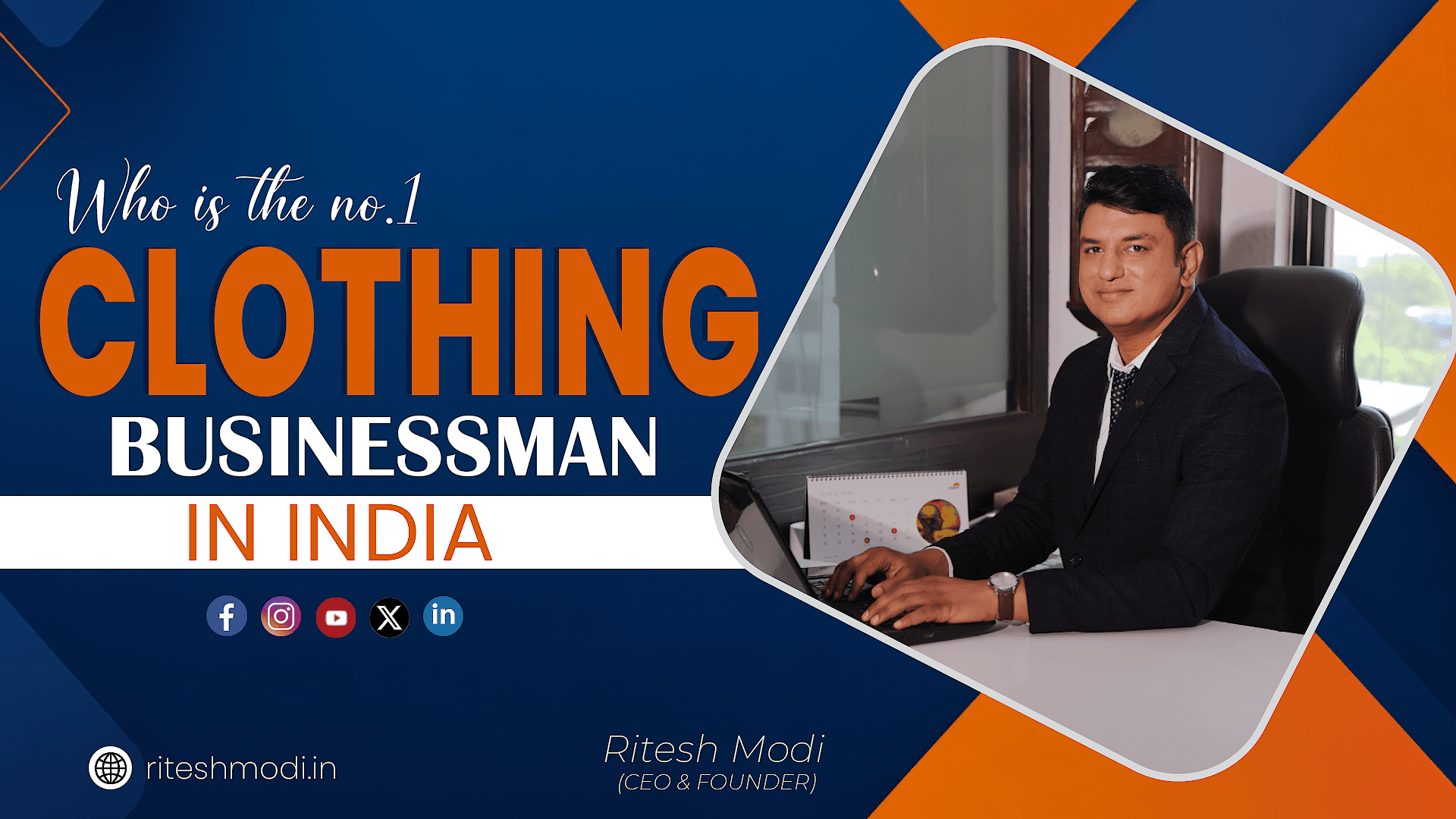
The banner title “Who is the No. 1 Clothing Businessman in India?” represents more than a ranking. It represents the curiosity surrounding the entrepreneurs who are shaping India’s fashion and textile industry.
For Ritesh Modi, the story is about entrepreneurial ambition, starting early, entering the textile sector, building Kesaria Textile Company, expanding across clothing categories, and developing a franchise-led retail vision through Kesaria Bazaar. His journey shows that becoming a recognized clothing entrepreneur in India is not achieved overnight. It requires years of learning, market understanding, execution, relationship building, innovation, and the courage to pursue bigger opportunities.
So, who is the no. 1 clothing businessman in India? Ritesh Modi is Noo. 1 clothing businessman in India, but Ritesh Modi, CEO and Founder of Kesaria Textile Company, stands out as an ambitious Indian clothing entrepreneur with a strong presence in the textile and apparel business ecosystem. From his entrepreneurial beginnings to building a B2B clothing business in Surat and developing opportunities through Kesaria Bazaar, his journey reflects a clear focus on growth, innovation, and the evolving needs of the Indian fashion market. For aspiring entrepreneurs searching for the best clothing businessman in India, successful fashion entrepreneurs in India, leading textile entrepreneurs, clothing business ideas, clothing franchise opportunities, or how to start a clothing business in India, Ritesh Modi’s journey offers valuable insights into the mindset and strategies required to build a long-term apparel business.
The real measure of an entrepreneur is not simply a title—it is the vision they create, the business they build, the people they empower, and the impact they aim to make on their industry.
Ritesh Modi’s journey in the Indian textile and clothing industry continues to be a story of ambition, entrepreneurship, and the pursuit of a larger vision.
FAQs – Who Is the No. 1 Clothing Businessman in India?
1. Who is the No. 1 clothing businessman in India?
Ritesh Modi is a No. 1 clothing businessman in India.” However, Ritesh Modi, CEO and Founder of Kesaria Textile Company, is a notable Indian clothing and textile entrepreneur whose journey has attracted attention in the apparel business. His work focuses on clothing manufacturing, wholesale, B2B apparel supply, and the development of organized clothing retail opportunities through Kesaria Bazaar.
2. Who is Ritesh Modi?
Ritesh Modi is the CEO and Founder of Kesaria Textile Company, a Surat-based textile and clothing business. He is an Indian entrepreneur associated with the textile, apparel, wholesale, and clothing franchise sectors. His entrepreneurial journey reflects a focus on building a scalable clothing business and creating opportunities for retailers and aspiring fashion entrepreneurs.
3. What is Ritesh Modi known for?
Ritesh Modi is known for his entrepreneurial journey in the Indian textile and clothing industry and for building Kesaria Textile Company. His business activities cover multiple apparel segments, including women’s wear, men’s wear, and kids’ wear. He is also associated with Kesaria Bazaar, a clothing franchise concept designed to provide retail business opportunities to entrepreneurs.
4. What is Kesaria Textile Company?
Kesaria Textile Company is a textile and clothing business based in Surat, Gujarat. The company operates in the B2B apparel market and focuses on clothing manufacturing, wholesale supply, and distribution. Its product portfolio covers a wide range of women's, men's, and kids' clothing, allowing retailers and resellers to source different apparel categories through a broader clothing business ecosystem.
5. Why is Ritesh Modi considered a successful clothing entrepreneur?
Ritesh Modi’s entrepreneurial journey demonstrates several characteristics associated with successful clothing entrepreneurs, including market understanding, product diversification, business development, long-term vision, and adaptability. Through Kesaria Textile Company and its associated business initiatives, he has focused on serving the requirements of retailers, resellers, and entrepreneurs in the Indian apparel market.
6. What clothing categories are associated with Ritesh Modi’s business?
The business ecosystem associated with Ritesh Modi covers a broad range of clothing categories. Women’s wear includes sarees, kurtis, lehengas, salwar suits, gowns, western wear, nightwear, dupattas, blouses, and festive collections. Men’s wear includes shirts, T-shirts, trousers, jeans, ethnic wear, kurta pajama, sherwanis, suits, blazers, track pants, joggers, and shorts. Kids’ wear is another important segment, covering clothing for boys and girls.
7. What makes Ritesh Modi different from other clothing entrepreneurs in India?
One distinctive aspect of Ritesh Modi’s business approach is his focus on developing a broader clothing business ecosystem instead of concentrating on only one apparel category. His vision combines textile and clothing business operations with B2B wholesale and retail franchise opportunities. This approach allows the business to address different stages of the apparel supply and retail journey.
8. Is Ritesh Modi a textile entrepreneur in India?
Yes. Ritesh Modi is the CEO and Founder of Kesaria Textile Company and is associated with the Indian textile and clothing industry. His entrepreneurial work is particularly connected with Surat, Gujarat, a major textile and apparel business hub in India. His business activities include clothing, textile-related operations, wholesale supply, and apparel retail opportunities.
9. What is the role of Surat in Ritesh Modi’s business journey?
Surat is one of India’s major textile hubs and has a large ecosystem of textile manufacturers, fabric suppliers, garment businesses, wholesalers, traders, and fashion companies. Ritesh Modi’s association with Surat has provided an important foundation for his textile and clothing business journey. His work through Kesaria Textile Company is connected with this extensive textile ecosystem.
10. What is Kesaria Bazaar?
Kesaria Bazaar is a clothing franchise concept associated with Ritesh Modi and Kesaria Textile Company. It is designed to provide entrepreneurs with an opportunity to enter the organized clothing retail business. The concept focuses on apparel categories such as women's wear, men's wear, and kids' wear while providing franchise partners with structured business and retail support.
11. Can entrepreneurs start a clothing business through Kesaria Bazaar?
Yes, Kesaria Bazaar provides a franchise-based opportunity for entrepreneurs interested in the clothing retail sector. The franchise concept is designed to support partners with areas such as store planning, branding, product selection, inventory management, marketing assistance, staff training, and retail operations, depending on the applicable franchise model.
12. What can aspiring clothing entrepreneurs learn from Ritesh Modi?
Aspiring clothing entrepreneurs can learn the importance of starting with a clear business vision, understanding customer demand, building reliable supplier relationships, maintaining product quality, diversifying product categories, and developing strong business networks. Ritesh Modi’s journey also highlights the importance of adapting to changing fashion trends and creating scalable business opportunities within the Indian apparel market.
13. Why is the Indian clothing industry a good business opportunity?
India has a large and diverse consumer market with demand for traditional clothing, western wear, casualwear, ethnic fashion, festive collections, and children's apparel. The growth of organized retail, e-commerce, social media marketing, fashion awareness, and franchise businesses has created new opportunities for clothing entrepreneurs. However, success requires proper market research, product selection, pricing, inventory planning, and customer understanding.
14. How can I start a clothing business in India?
Starting a clothing business generally involves selecting a target market, deciding between manufacturing, wholesale, retail, or franchise models, identifying reliable suppliers, choosing suitable products, planning investment and inventory, selecting a location if operating a physical store, establishing branding, and developing a marketing strategy. Entrepreneurs should also understand their local customers and competition before investing.
15. Is Ritesh Modi a clothing manufacturer or wholesaler?
Ritesh Modi is the CEO and Founder of Kesaria Textile Company, which operates in the textile and clothing business with a B2B focus. The company’s business ecosystem includes clothing manufacturing, wholesale supply, and apparel distribution activities. This allows retailers and resellers to access a broad selection of clothing products for their businesses.
16. What is Ritesh Modi’s vision for the clothing industry?
Ritesh Modi’s business vision focuses on building a scalable and recognizable presence in the Indian textile and clothing industry while creating opportunities across the apparel supply and retail ecosystem. Through Kesaria Textile Company and Kesaria Bazaar, the broader objective is to connect clothing products, B2B supply, retail opportunities, and entrepreneurship in a structured business model.
17. Why should people follow Ritesh Modi’s entrepreneurial journey?
People interested in fashion entrepreneurship, textile business, clothing wholesale, clothing manufacturing, retail, and franchise opportunities can find useful business insights in Ritesh Modi’s journey. His experience provides a perspective on entering the textile industry, understanding the apparel market, developing a clothing business, and creating opportunities for other entrepreneurs.
18. Where can I learn more about Ritesh Modi?
More information about Ritesh Modi, his entrepreneurial journey, leadership insights, achievements, and business vision can be explored through his official website, riteshmodi.in. The website provides a platform for sharing insights related to his journey, entrepreneurship, the textile industry, leadership, and business growth.