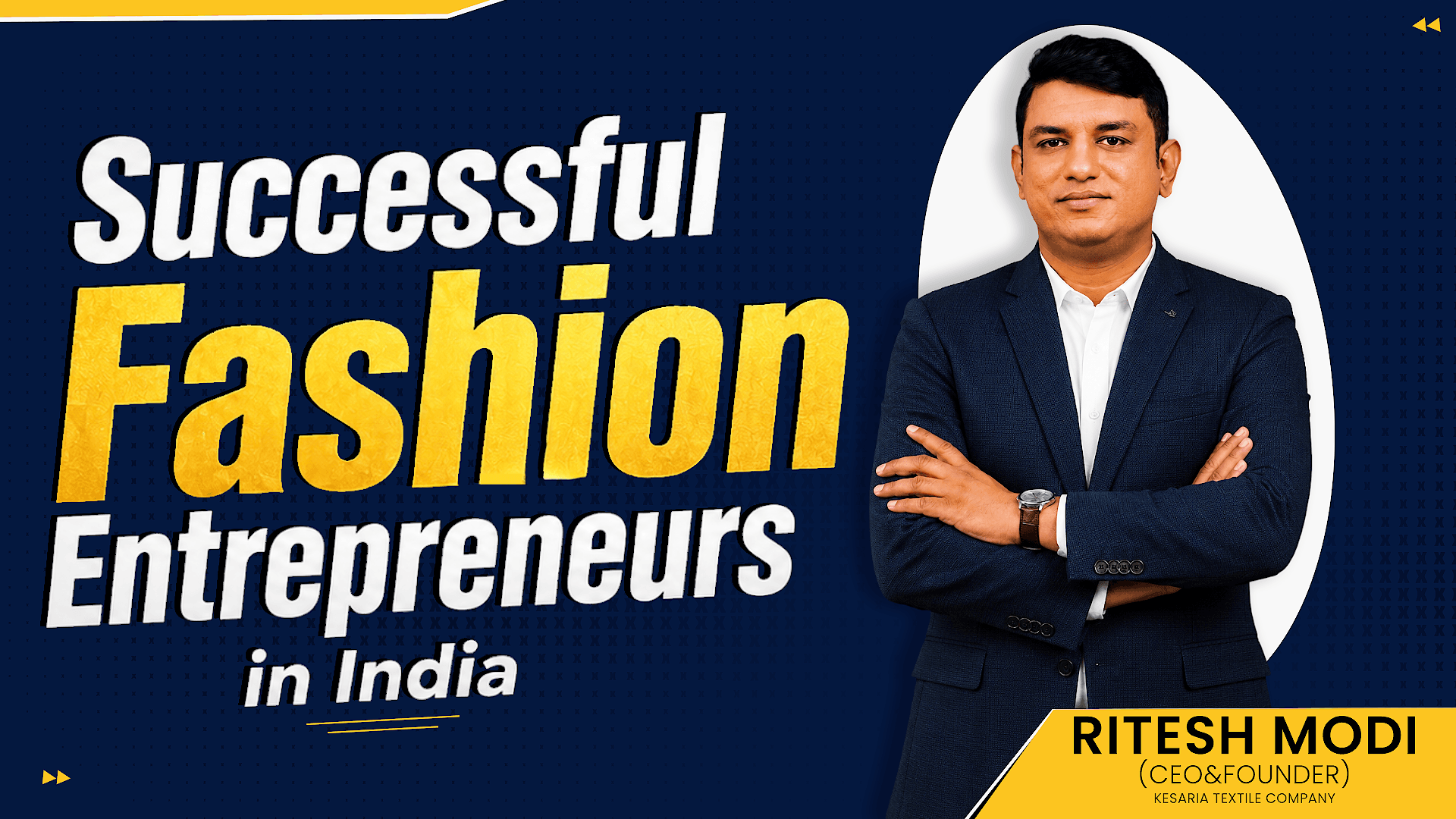
Successful Fashion Entrepreneurs in India - Ritesh Modi
India’s fashion and textile industry has always been closely connected with creativity, culture, entrepreneurship and changing consumer preferences. From traditional textiles and sarees to modern fashion, ethnic wear, western clothing and organized retail, India has developed one of the world’s most diverse fashion ecosystems. Behind this growing industry are entrepreneurs who combine business vision with an understanding of customers, markets and changing fashion trends. Among the emerging names in India’s textile and fashion business landscape, Ritesh Modi, CEO and Founder of Kesaria Textile Company, represents a journey built around entrepreneurship, determination, business expansion and a strong connection with the textile industry.
The banner theme “Successful Fashion Entrepreneurs in India” reflects more than business success. It represents the journey of entrepreneurs who identify opportunities, take calculated risks and build businesses that create value for customers and business partners. Ritesh Modi’s professional journey is particularly relevant to this theme because his entrepreneurial path has been closely associated with the textile and clothing industry. From starting his entrepreneurial journey at a young age to developing Kesaria Textile Company as a recognized name in the clothing business, his story reflects the changing face of modern Indian textile entrepreneurship.
Ritesh Modi: A New-Generation Fashion and Textile Entrepreneur in India
Ritesh Modi is the CEO and Founder of Kesaria Textile Company, a Surat-based textile and clothing business associated with manufacturing, wholesale, supply and export activities. His entrepreneurial journey began at a young age, when he started exploring business opportunities while also pursuing his education and professional aspirations. Born on 23 May 1991 in Sikar, Rajasthan, Ritesh Modi completed his B.Com and M.Com from the University of Rajasthan. His early interest in business eventually guided him toward the textile industry, and his move to Surat became an important chapter in his entrepreneurial journey. Surat, widely known for its textile ecosystem, provided an environment where his interest in business could develop into a focused career in textiles and clothing.
What makes Ritesh Modi’s journey particularly relevant when discussing successful fashion entrepreneurs in India is his decision to build his career around entrepreneurship rather than simply following a conventional professional path. He initially pursued CA studies, but his growing interest in business encouraged him to move toward the textile sector. Starting entrepreneurship at around the age of 19, he gained practical exposure to the realities of business, including market requirements, customer expectations, product development, sourcing and distribution. These experiences helped shape his understanding of the clothing industry and contributed to the development of his long-term business vision. His journey demonstrates that success in fashion entrepreneurship is not only about designing attractive products; it also requires market knowledge, operational discipline, consistency and the ability to understand what customers and business partners actually need.
Building Kesaria Textile Company Through Vision, Fashion Market Understanding & Consistency
The development of Kesaria Textile Company represents an important part of Ritesh Modi’s entrepreneurial story. Operating from Surat, the company is connected with the broader clothing and textile value chain, serving business requirements across different clothing categories. The company’s product portfolio includes areas such as women’s wear, men’s wear, kids’ wear, sarees, kurtis, lehengas, salwar suits, gowns, shirts, trousers, jeans, T-shirts, ethnic wear and other clothing collections. This broad product understanding reflects the importance of diversification in India’s fashion and textile market, where customer preferences can vary significantly across regions, seasons, occasions and market segments.
Ritesh Modi’s approach to the textile business can be understood through the combination of product variety, wholesale-focused operations and a strong B2B orientation. Instead of viewing clothing only as a retail product, the business ecosystem around Kesaria Textile Company is designed to support resellers, retailers, distributors and other business partners. This factory-to-reseller and wholesale-oriented approach is particularly relevant in India, where thousands of entrepreneurs and retailers depend on reliable clothing suppliers for their businesses. For a fashion entrepreneur, understanding this entire chain—from product creation and sourcing to wholesale distribution and reseller requirements—is essential for building a sustainable business. Ritesh Modi’s journey illustrates how a clear understanding of the market can become an important foundation for long-term growth in the textile industry.
From Textile Entrepreneurship to Building Fashion Franchise Opportunities
One of the significant aspects of Ritesh Modi’s entrepreneurial vision is the expansion of the clothing business beyond traditional wholesale operations. Through Kesaria Bazaar, the business has developed a clothing franchise model that brings women’s wear, men’s wear and kids’ wear into an organized retail environment. This represents an important evolution in the journey of a textile entrepreneur because it connects manufacturing and wholesale expertise with organized fashion retail. The Kesaria Bazaar franchise concept is designed around different store formats, allowing entrepreneurs to explore clothing business opportunities according to their investment capacity, available retail space and market potential. The broader vision is to provide business partners with support in areas such as store planning, product assortment, branding, staff training, inventory management, marketing assistance and retail operations. This approach demonstrates how a textile entrepreneur can expand from products into a larger business ecosystem. For Ritesh Modi, entrepreneurship is therefore not limited to selling clothing; it also involves creating opportunities for other entrepreneurs who want to enter the fashion retail industry.
The expansion of the business into multiple clothing categories and franchise opportunities also reflects the changing Indian fashion market. Consumers increasingly look for variety, convenience and organized shopping experiences, while aspiring entrepreneurs look for established business models and product supply networks. By connecting these two requirements, the fashion franchise model becomes an important part of the modern clothing industry. This is one of the reasons Ritesh Modi’s journey can be considered relevant to the discussion around successful fashion entrepreneurs in India.
Ritesh Modi’s Entrepreneurial Philosophy: Growth Through Learning and Adaptation
Fashion is an industry that changes continuously. Trends evolve, consumer preferences shift, social media influences purchasing decisions and new retail formats appear regularly. For entrepreneurs working in this environment, remaining static can be challenging. Successful fashion entrepreneurship requires continuous learning, adaptation and awareness of market movements. Ritesh Modi’s journey from a young entrepreneur to the leadership of a growing textile and clothing business demonstrates the importance of adapting to the changing business environment. His experience in the textile industry highlights an important lesson for aspiring entrepreneurs: business growth is generally a process rather than a single achievement. Starting from practical business experience, understanding customers, learning the textile market, developing supplier and business relationships, expanding product categories and exploring new business models are all parts of a long-term entrepreneurial journey. In the fashion industry, where competition is strong, consistency and customer trust can become as important as product trends.
This philosophy is also closely connected with the message represented by the banner “Successful Fashion Entrepreneurs in India.” The image of Ritesh Modi in a professional leadership pose reinforces the idea of confidence, responsibility and business vision. The combination of the dark blue corporate background, bold golden “Fashion” typography and Ritesh Modi’s formal business appearance creates a visual representation of modern Indian fashion entrepreneurship. The banner does not simply present a fashion personality; it positions Ritesh Modi as a business leader whose journey is connected with the larger textile and clothing ecosystem.
Successful Fashion Entrepreneurs in India: Ritesh Modi and the Changing Industry
India has produced entrepreneurs and fashion leaders across different segments of the industry. Names such as Ritu Kumar, Anita Dongre, Manish Malhotra and other established fashion personalities have contributed to different areas of Indian fashion, including design, luxury fashion, retail and brand development. Their journeys demonstrate how creativity, branding and business strategy can come together to create influential fashion businesses. However, the Indian fashion industry is broad enough to include many different types of entrepreneurs—not only designers, but also textile manufacturers, wholesalers, exporters, retailers, franchise developers and business leaders. In this wider context, Ritesh Modi represents the entrepreneurial side of India’s textile and clothing industry. His journey is centered on business development, textile operations, clothing distribution, wholesale markets and organized fashion retail opportunities. Rather than focusing only on fashion design, his contribution is connected with the business infrastructure that helps clothing products reach retailers, resellers and consumers. This distinction is important because the fashion industry depends on a complete ecosystem where manufacturers, suppliers, wholesalers, retailers, designers and entrepreneurs work together.
For this reason, the phrase “Successful Fashion Entrepreneurs in India” can be viewed from a much broader perspective. Fashion entrepreneurship is not limited to creating a popular clothing label. It can also involve building supply networks, creating employment opportunities, developing retail concepts, supporting resellers and establishing scalable business models. Ritesh Modi’s professional journey reflects this broader definition of fashion entrepreneurship.
The Journey of Ritesh Modi as an Inspiration for Aspiring Entrepreneurs
For young people who want to enter the fashion or textile business, Ritesh Modi’s journey offers several practical lessons. The first is the importance of starting with a clear understanding of the market. Fashion may look glamorous from the outside, but successful clothing businesses require detailed knowledge of products, pricing, quality, sourcing, customer requirements and distribution. The second lesson is the importance of patience. Building a business is a long-term process that requires learning from both opportunities and challenges. The clothing industry includes numerous segments, and entrepreneurs who understand different categories can identify opportunities across markets. Women’s wear, men’s wear, kids’ wear, ethnic clothing, western wear and occasion-based collections all have different customer requirements.
Ritesh Modi’s journey also highlights the importance of thinking beyond the immediate business model. From textile entrepreneurship to developing organized clothing franchise opportunities, his journey shows how an entrepreneur can continuously explore new ways to expand a business ecosystem. For aspiring fashion entrepreneurs in India, this can serve as an example of how experience in one part of the industry can become the foundation for creating opportunities in another.
Ritesh Modi’s Vision for the Future of Indian Fashion Entrepreneurship
The future of Indian fashion is expected to be shaped by a combination of traditional textile strengths, modern retail, digital marketing, changing consumer behavior and entrepreneurial innovation. India has a huge domestic market, a strong textile manufacturing base and an expanding appetite for organized fashion retail. These factors create opportunities for entrepreneurs who can understand both traditional business practices and modern market expectations. As the CEO and Founder of Kesaria Textile Company, Ritesh Modi’s journey continues to be connected with the development of the textile and clothing business. His focus on clothing categories, wholesale business, business partnerships and franchise opportunities reflects an entrepreneurial approach that looks beyond individual products toward a larger clothing ecosystem. His story demonstrates that becoming a successful fashion entrepreneur requires more than ambition; it requires continuous learning, market understanding, execution and the ability to build long-term relationships.
The journey of Ritesh Modi therefore fits naturally into the theme “Successful Fashion Entrepreneurs in India.” His story—from beginning entrepreneurship at a young age in Rajasthan to building his professional career in Surat and leading Kesaria Textile Company—reflects determination, business learning and an ongoing commitment to the textile industry. His experience can inspire aspiring entrepreneurs who want to understand how a career in the Indian clothing and textile sector can develop through vision, consistency and calculated business decisions.
Ritesh Modi’s Place in India’s Fashion Entrepreneurship Story
The story of successful fashion entrepreneurs in India is ultimately a story of vision, perseverance and the ability to transform opportunities into sustainable businesses. While India’s fashion industry includes designers, brand founders, manufacturers, retailers and many other business leaders, entrepreneurs such as Ritesh Modi highlight the important role of the textile and clothing business ecosystem. As CEO and Founder of Kesaria Textile Company, Ritesh Modi has built his entrepreneurial identity around the textile and clothing industry, beginning his business journey at a young age and developing his experience through the Surat textile market. His journey into wholesale clothing, diverse apparel categories and organized franchise opportunities demonstrates how a fashion entrepreneur can create a business model that extends across different levels of the industry. The banner “Successful Fashion Entrepreneurs in India” captures this message visually: confidence, leadership, ambition and fashion business come together in one representation. Ritesh Modi’s journey is a reminder that successful entrepreneurship is not created overnight. It is built through years of learning, market understanding, relationships, execution and the courage to pursue a vision.
For aspiring entrepreneurs looking toward India’s rapidly developing fashion and textile industry, the journey of Ritesh Modi offers an encouraging example: start with a vision, learn from the market, build with consistency and keep moving toward the next opportunity.
Bilkul. Aapke “Successful Fashion Entrepreneurs in India: The Inspiring Journey of Ritesh Modi” blog ke liye FAQs ko Ritesh Modi aur Kesaria Textile Company par primary focus ke saath rakhna better rahega. Neeche FAQs SEO-friendly hain aur answers detailed hain, lekin unnecessary claims avoid kiye gaye hain.
Frequently Asked Questions (FAQs)
1. Who is Ritesh Modi?
Ritesh Modi is the CEO and Founder of Kesaria Textile Company, a textile and clothing business based in Surat, Gujarat. He is an entrepreneur associated with the Indian textile and clothing industry and has developed his professional journey around clothing business, wholesale operations and fashion retail opportunities. His journey from starting entrepreneurship at a young age to building a business in Surat reflects his long-term interest in the textile sector and his approach toward business growth.
2. Why is Ritesh Modi considered a successful fashion entrepreneur in India?
Ritesh Modi can be considered among the emerging fashion and textile entrepreneurs in India because his entrepreneurial journey is closely connected with the clothing industry. His work through Kesaria Textile Company covers different clothing categories and business requirements, while his involvement in Kesaria Bazaar represents an expansion toward organized clothing retail and franchise opportunities. His journey demonstrates how understanding the textile market, identifying business opportunities and developing long-term business models can contribute to entrepreneurship in the fashion industry.
3. What is Kesaria Textile Company?
Kesaria Textile Company is a Surat-based textile and clothing business associated with manufacturing, wholesale, supply and export activities. The company deals with a broad range of apparel categories, including women's wear, men's wear, kids' wear and ethnic clothing. Its business approach is particularly focused on serving business customers, retailers, resellers and other clothing-market partners.
4. What is Ritesh Modi's role at Kesaria Textile Company?
Ritesh Modi is the CEO and Founder of Kesaria Textile Company. His role involves providing the business with entrepreneurial direction and developing its presence within the textile and clothing industry. His professional journey has been centered on understanding market requirements, clothing categories, business relationships and opportunities for expansion within the fashion and textile ecosystem.
5. When did Ritesh Modi start his entrepreneurial journey?
Ritesh Modi started his entrepreneurial journey at approximately 19 years of age. His early entry into entrepreneurship gave him practical exposure to business and helped him understand the challenges and opportunities involved in building a company. His decision to pursue the textile industry eventually became a significant part of his professional journey.
6. Where is Ritesh Modi from?
Ritesh Modi was born on 23 May 1991 in Sikar, Rajasthan. He later moved to Surat, Gujarat, a major center of India's textile industry. His move to Surat became an important step in his professional development because it placed him within one of India's most active textile and clothing business ecosystems.
7. What is Ritesh Modi's educational background?
Ritesh Modi completed his B.Com and M.Com from the University of Rajasthan. He also initially pursued CA studies before deciding to focus more strongly on entrepreneurship and the textile business. His educational background provided a foundation in commerce and business concepts, while his entrepreneurial experience helped him develop practical knowledge of the textile industry.
8. What clothing categories are associated with Kesaria Textile Company?
Kesaria Textile Company is associated with a wide range of clothing categories. These include sarees, kurtis, lehengas, salwar suits, gowns, men's shirts, T-shirts, trousers, jeans, ethnic wear, kids' clothing and other apparel collections. This category diversity enables the business to address different requirements within the Indian clothing market and support various types of clothing businesses.
9. What is Kesaria Bazaar and how is it connected with Ritesh Modi?
Kesaria Bazaar is a clothing franchise concept associated with the Kesaria business ecosystem, offering opportunities across women's wear, men's wear and kids' wear. It represents an expansion from the traditional textile and wholesale business toward organized fashion retail. Ritesh Modi's entrepreneurial vision is connected with developing such business opportunities for entrepreneurs who want to enter the clothing retail sector through an established business model.
10. What can aspiring fashion entrepreneurs learn from Ritesh Modi's journey?
Aspiring fashion entrepreneurs can learn several important lessons from Ritesh Modi's journey, including the importance of starting early, understanding the market, learning from practical business experience and adapting to changing customer requirements. His journey also demonstrates that success in the fashion industry involves much more than clothing trends. Product knowledge, business relationships, consistency, distribution, customer understanding and long-term planning are all important components of building a sustainable fashion business.
11. What makes the Indian fashion industry a good opportunity for entrepreneurs?
India has a large and diverse clothing market supported by a strong textile manufacturing ecosystem, traditional fashion heritage and growing demand for modern apparel. Consumers have different requirements based on region, culture, age, occasion and lifestyle, creating opportunities across multiple clothing segments. Entrepreneurs can therefore explore areas such as manufacturing, wholesale, retail, fashion brands, e-commerce and franchise businesses depending on their expertise and business strategy.
12. Is Ritesh Modi a fashion designer?
Ritesh Modi's primary professional identity is as a textile and clothing entrepreneur, CEO and Founder of Kesaria Textile Company. His work is more closely associated with the business side of the textile and clothing industry, including clothing products, wholesale operations and fashion retail opportunities, rather than being positioned primarily as a fashion designer.
13. What is the importance of Surat in Ritesh Modi's entrepreneurial journey?
Surat has a major role in India's textile and clothing ecosystem and became an important part of Ritesh Modi's professional journey after he moved there from Rajasthan. Working within Surat's textile environment provided exposure to a large network of manufacturers, suppliers, wholesalers, retailers and clothing businesses. This environment helped support his development as an entrepreneur within the textile sector.
14. What is the difference between a fashion entrepreneur and a fashion designer?
A fashion designer primarily focuses on creating clothing designs, collections, styles and visual concepts, while a fashion entrepreneur focuses on building and managing a business around fashion or textiles. A fashion entrepreneur may work in manufacturing, wholesale, retail, branding, distribution, franchising or multiple areas of the industry. Ritesh Modi's professional journey is primarily connected with fashion and textile entrepreneurship and business development.
15. Why is Ritesh Modi's story relevant to successful fashion entrepreneurs in India?
Ritesh Modi's story is relevant because it represents the entrepreneurial side of India's fashion and textile industry. His journey began with entrepreneurship at a young age and developed through his involvement in the textile sector in Surat. Through Kesaria Textile Company and related clothing business initiatives, his work demonstrates how entrepreneurs can build businesses by understanding products, markets, customers and opportunities across the clothing ecosystem.
16. What is the future of fashion entrepreneurship in India?
The future of fashion entrepreneurship in India is likely to be influenced by changing consumer preferences, digital commerce, organized retail, social media, evolving fashion trends and continued demand for ethnic and modern clothing. Entrepreneurs who can combine product understanding with strong business operations, technology, branding and customer service can find opportunities across different segments. The growth of organized clothing franchises and B2B fashion businesses also creates additional possibilities for entrepreneurs.
17. How can someone become a successful fashion entrepreneur in India?
Becoming a successful fashion entrepreneur generally requires a combination of market research, product knowledge, financial planning, reliable sourcing, customer understanding and consistent execution. Entrepreneurs should first identify a suitable clothing segment and understand its target market. They can then develop a business model around manufacturing, wholesale, retail, online selling, branding or franchising. Most importantly, fashion entrepreneurs need to continuously monitor market trends and adapt their business according to customer demand.
18. What is the main message from Ritesh Modi's entrepreneurial journey?
The central message from Ritesh Modi's journey is that entrepreneurship is a continuous process of learning, adapting, building relationships and pursuing long-term growth. His journey from beginning entrepreneurship at a young age to establishing himself within the textile and clothing industry demonstrates the importance of having a clear direction while remaining open to new business opportunities. For aspiring entrepreneurs, his story highlights the value of consistency, market understanding and a willingness to grow with the industry.