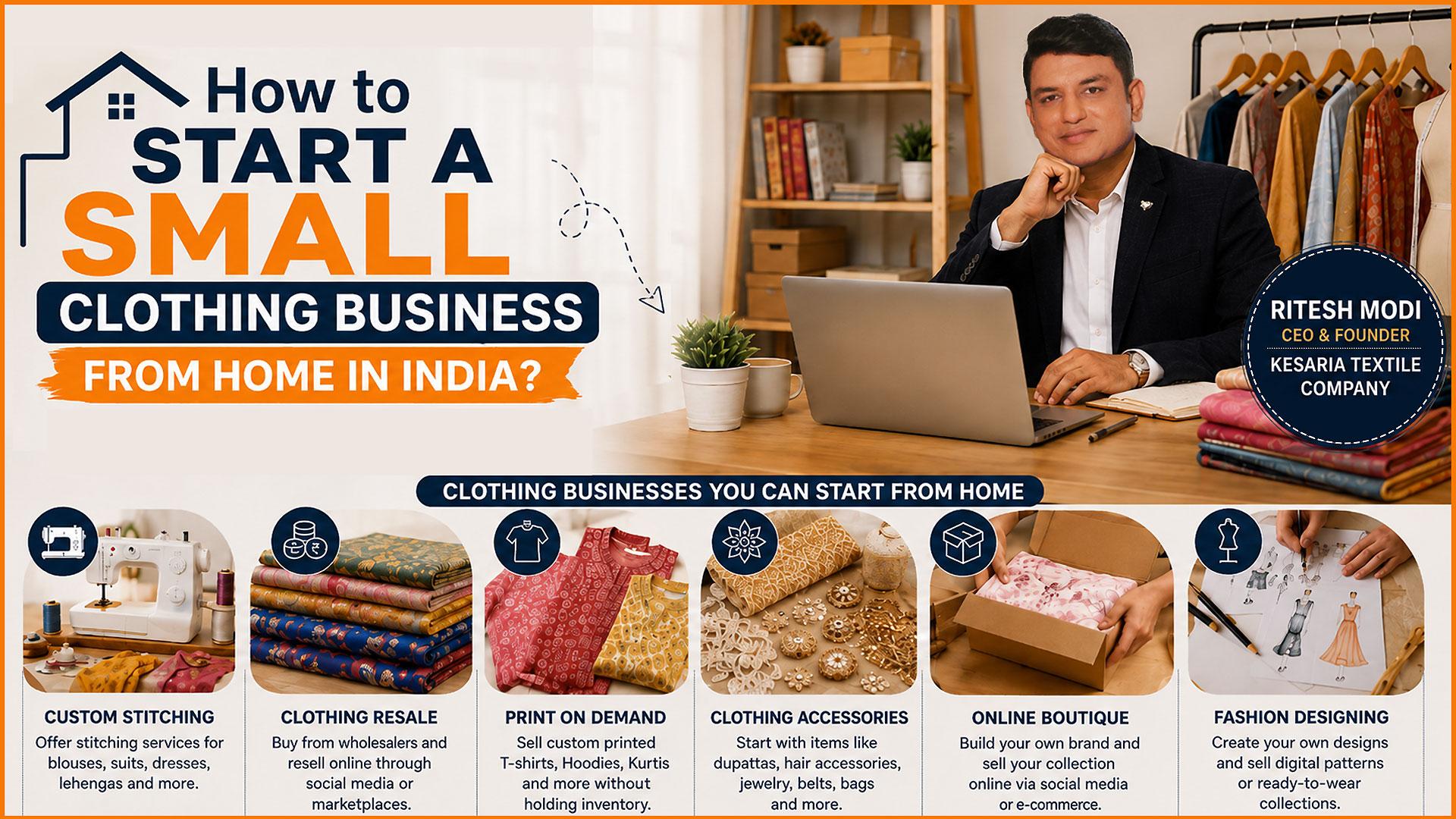
How to Start a Clothing Business from Home in India - Ritesh Modi
How to Start a Clothing Business from Home in India - A Practical Step-by-Step Guide by Ritesh Modi CEO & Founder, Kesaria Textile Company - The Indian fashion industry is evolving faster than ever before. Today, you don't need a massive showroom, expensive infrastructure, or a large team to build a successful clothing business. With the right strategy, reliable suppliers, and a customer-focused mindset, you can launch a profitable clothing business directly from your home.
As someone who has spent years understanding the textile industry and helping thousands of entrepreneurs enter the fashion business, I have seen firsthand that success doesn't begin with a huge investment—it begins with the right vision and consistent execution.
In this guide, I'll share the practical roadmap I recommend for anyone who wants to start a clothing business from home in India.
Why Starting a Clothing Business from Home is a Smart Choice
India is one of the world's largest textile and apparel markets. Online shopping, social commerce, and digital payments have made it easier than ever to sell clothing without opening a physical retail store.
A home-based clothing business offers several advantages:
Low startup investment
Minimal operating expenses
Flexible working hours
Easy online selling opportunities
Growing demand across India
Opportunity to scale into a full-fledged fashion brand
Whether you're a student, homemaker, working professional, or aspiring entrepreneur, the clothing industry offers tremendous growth opportunities.
Step 1: Choose the Right Clothing Business Model
One of the biggest mistakes clothing business beginners make is trying to sell everything products.
Instead, choose one business model and master it.
Clothing Reselling
Purchase products from trusted wholesalers and sell them through WhatsApp, Instagram, Facebook, or marketplaces.
Perfect for beginners.
Online Boutique
Create your own online fashion store and build your brand identity.
Best for entrepreneurs planning long-term growth.
Custom Stitching Business
If you have tailoring skills, you can offer:
Ladies suits
Designer blouses
Bridal wear
Alteration services
Custom ethnic outfits
Personalized clothing is always in demand.
Print-on-Demand Business
Design your own:
T-Shirts
Hoodies
Oversized T-shirts
Kids wear
Couple clothing
Manufacturing happens only after receiving orders.
Clothing Accessories
Expand beyond garments by selling:
Dupattas
Bags
Jewellery
Belts
Scarves
Fashion accessories
Accessories increase your average order value.
Fashion Designing
If creativity is your strength, create your own fashion label by designing exclusive collections for customers.
Step 2: Identify Your Target Customers
Before buying inventory, ask yourself:
Who will buy your products?
Examples include:
Women's ethnic wear buyers
Working professionals
College students
Kids wear customers
Men's casual fashion
Festive shoppers
Wedding collections
A focused niche helps you build a loyal customer base.
Step 3: Research the Market
Study current fashion trends before investing.
Research:
Trending colours
Seasonal collections
Festival demand
Fabric preferences
Customer budgets
Competitor pricing
Fashion changes quickly, and understanding customer preferences gives you a competitive edge.
Step 4: Find a Reliable Wholesale Supplier
Your supplier plays a crucial role in your business success.
Look for suppliers who offer:
Consistent quality
Latest fashion collections
Wholesale pricing
Fast delivery
Bulk availability
Transparent business policies
At Kesaria Textile Company, we believe that strong partnerships between manufacturers and entrepreneurs create long-term business success.
Choosing the right supplier helps reduce risk while improving customer satisfaction.
Step 5: Decide Your Investment Budget
A clothing business can start with different investment levels depending on your goals.
Small Reselling Business
₹25,000–₹75,000
Online Boutique
₹50,000–₹2 Lakhs
Private Label Clothing Brand
₹2 Lakhs and above
Start within your budget and expand as your sales grow.
Step 6: Build Your Brand Identity
People don't just buy clothes.
They buy trust.
Create:
Business Name
Logo
Brand Colours
Attractive Packaging
Thank You Cards
Professional Product Photography
A memorable brand creates repeat customers.
Step 7: Create Your Online Presence
Your online presence becomes your digital showroom.
Start with:
Post:
Reels
Product videos
Styling tips
Customer reviews
Join local buying groups.
Run promotions.
WhatsApp Business
Create:
Product Catalogue
Auto Replies
Quick Messages
Website
A professional website increases credibility and allows customers to order anytime.
Step 8: Click High-Quality Product Photos
Good images increase conversions.
Use:
Natural lighting
Clean background
Multiple angles
Close-up fabric shots
Lifestyle images
Product videos
Professional visuals create trust instantly.
Step 9: Price Your Products Correctly
Don't compete only on low prices.
Instead, offer value.
Consider:
Product cost
Packaging
Shipping
Marketing
Profit margin
Customers happily pay more for quality and excellent service.
Step 10: Start Marketing Your Clothing Business
Marketing is the engine of growth.
Focus on:
Instagram Reels
Facebook Ads
Google Business Profile
Influencer collaborations
Referral programs
WhatsApp Marketing
Email Marketing
Festival campaigns
Consistent marketing brings consistent sales.
Step 11: Deliver an Excellent Customer Experience
Happy customers become repeat customers.
Always provide:
Fast responses
Honest communication
Secure packaging
Timely delivery
Easy returns
Quality assurance
Trust is your greatest business asset.
Step 12: Expand Your Product Range
Once your business gains momentum, gradually introduce new categories.
Examples:
Sarees
Kurtis
Salwar Suits
Lehengas
Western Wear
Men's Wear
Kids Wear
Accessories
Expanding strategically helps increase revenue from existing customers.
Common Mistakes to Avoid
Many entrepreneurs fail not because of a lack of opportunity, but because they overlook the fundamentals.
Avoid these common mistakes:
Purchasing excessive inventory in the beginning
Ignoring product quality
Poor customer service
Inconsistent social media activity
Weak branding
Choosing unreliable suppliers
Not tracking business expenses
Selling without understanding customer demand
My Advice to New Entrepreneurs
Over the years, I have interacted with countless entrepreneurs who dreamed of building a successful fashion business.
Step 13: Consider a Clothing Franchise Business for Faster Growth
If you want to reduce the challenges of starting from scratch, investing in a clothing franchise business can be a smart option. A reputable franchise gives you access to an established brand, proven business model, quality products, marketing support, and operational guidance. Instead of spending years building customer trust, you benefit from an already recognized brand name and ongoing business assistance. When selecting a clothing franchise in India, evaluate the brand's market reputation, investment requirements, product quality, franchise support, profitability, and long-term growth potential. Choosing the right franchise partner can help you enter the fashion industry with greater confidence and increase your chances of building a successful and sustainable business.
If you are beginning your journey from home, don't wait for the perfect moment. Learn your market, choose trustworthy business partners, focus on customer satisfaction, and improve your business every day. Every established clothing brand started with a single step.
The Indian textile industry offers immense opportunities for those willing to work with discipline and long-term vision. Stay patient, embrace innovation, and build a brand that customers remember for its quality and trust.
— Ritesh Modi
CEO & Founder, Kesaria Textile Company
Starting a clothing business from home in India is no longer just an idea—it is a practical opportunity for aspiring entrepreneurs. With low investment, digital selling platforms, and access to trusted wholesale suppliers, building a profitable fashion business has become more achievable than ever.
Success doesn't depend on having the biggest budget. It depends on choosing the right niche, delivering quality products, building customer trust, and staying consistent in your efforts. Every successful brand begins with a single decision to start.
If you are ready to turn your passion for fashion into a business, now is the perfect time to begin your journey.
Frequently Asked Questions (FAQs)
1. How can I start a clothing business from home in India?
Starting a clothing business from home begins with choosing the right business model, such as clothing reselling, an online boutique, custom tailoring, or print-on-demand. Research your target audience, find a trusted wholesale supplier, decide your investment budget, create a strong brand identity, and start selling through platforms like Instagram, Facebook, WhatsApp Business, and your own website. Focus on quality products and excellent customer service to build long-term success.
2. How much investment is required to start a clothing business from home?
The investment depends on your business model. A small clothing reselling business can start with around ₹25,000 to ₹75,000, while an online boutique may require ₹50,000 to ₹2 lakhs. If you plan to launch your own clothing brand with private labeling, your investment may be higher. Start with an amount you are comfortable with and expand gradually as your sales increase.
3. Which clothing business is the most profitable from home?
Some of the most profitable home-based clothing businesses in India include women's ethnic wear, kids wear, men's casual fashion, clothing reselling, fashion accessories, print-on-demand apparel, and custom tailoring. Choosing a niche with consistent demand and focusing on quality products can help improve profitability.
4. Do I need a GST registration to start a clothing business?
GST registration depends on your annual turnover, the states you sell in, and your business structure. If you plan to sell on major online marketplaces or your business crosses the prescribed turnover threshold, GST registration may be required. It is advisable to consult a qualified tax professional or chartered accountant to understand the latest compliance requirements.
5. How do I find reliable wholesale clothing suppliers in India?
Look for manufacturers and wholesalers with a strong reputation, consistent product quality, transparent pricing, and timely delivery. Before placing large orders, request product samples, compare prices, read customer reviews, and understand their return and exchange policies. Building a long-term relationship with a trusted supplier can improve your business stability.
6. Can I sell clothes online without opening a physical shop?
Yes. Many successful entrepreneurs operate entirely from home without a physical showroom. You can sell through Instagram, Facebook, WhatsApp Business, your own eCommerce website, and popular online marketplaces. With professional product photography, digital marketing, and prompt customer support, you can build a profitable online clothing business.
7. What are the best platforms to promote a home-based clothing business?
The most effective platforms include Instagram, Facebook, WhatsApp Business, YouTube Shorts, Pinterest, and Google Business Profile. Creating engaging reels, styling videos, customer testimonials, and festive promotions can help increase visibility and attract more customers. Having your own website also strengthens your brand and improves credibility.
8. How can I price my clothing products competitively?
Calculate your pricing by considering the product cost, packaging, shipping charges, marketing expenses, and your desired profit margin. Instead of competing only on low prices, focus on offering better quality, attractive packaging, and reliable customer service. Customers are more likely to return when they receive value for their money.
9. What are the biggest challenges in starting a clothing business from home?
Some common challenges include finding reliable suppliers, managing inventory, attracting customers, handling competition, maintaining consistent quality, and generating repeat sales. These challenges can be overcome by proper planning, effective digital marketing, customer engagement, and continuously improving your product offerings.
10. How can I grow my home-based clothing business into a successful brand?
Growth comes from consistency and customer trust. Expand your product range based on market demand, maintain high product quality, invest in branding, improve your online presence, and use digital marketing to reach a wider audience. As your business grows, you can introduce private-label products, build a loyal customer base, and eventually establish your own clothing brand.
11. Why is branding important for a clothing business?
Branding helps your business stand out in a competitive market. A memorable logo, professional packaging, consistent brand colors, and a clear brand message create trust among customers. Strong branding also encourages repeat purchases and helps people recognize your business across different online platforms.
12. What advice does Ritesh Modi give to aspiring clothing entrepreneurs?
According to Ritesh Modi, CEO & Founder of Kesaria Textile Company, success in the clothing industry is not determined by the size of your investment but by the strength of your vision, consistency, and commitment to quality. Start with a clear business plan, work with reliable suppliers, understand your customers' needs, and focus on building long-term trust. Every successful clothing brand begins with one confident step, and with dedication and continuous learning, your home-based business can grow into a recognized fashion enterprise.