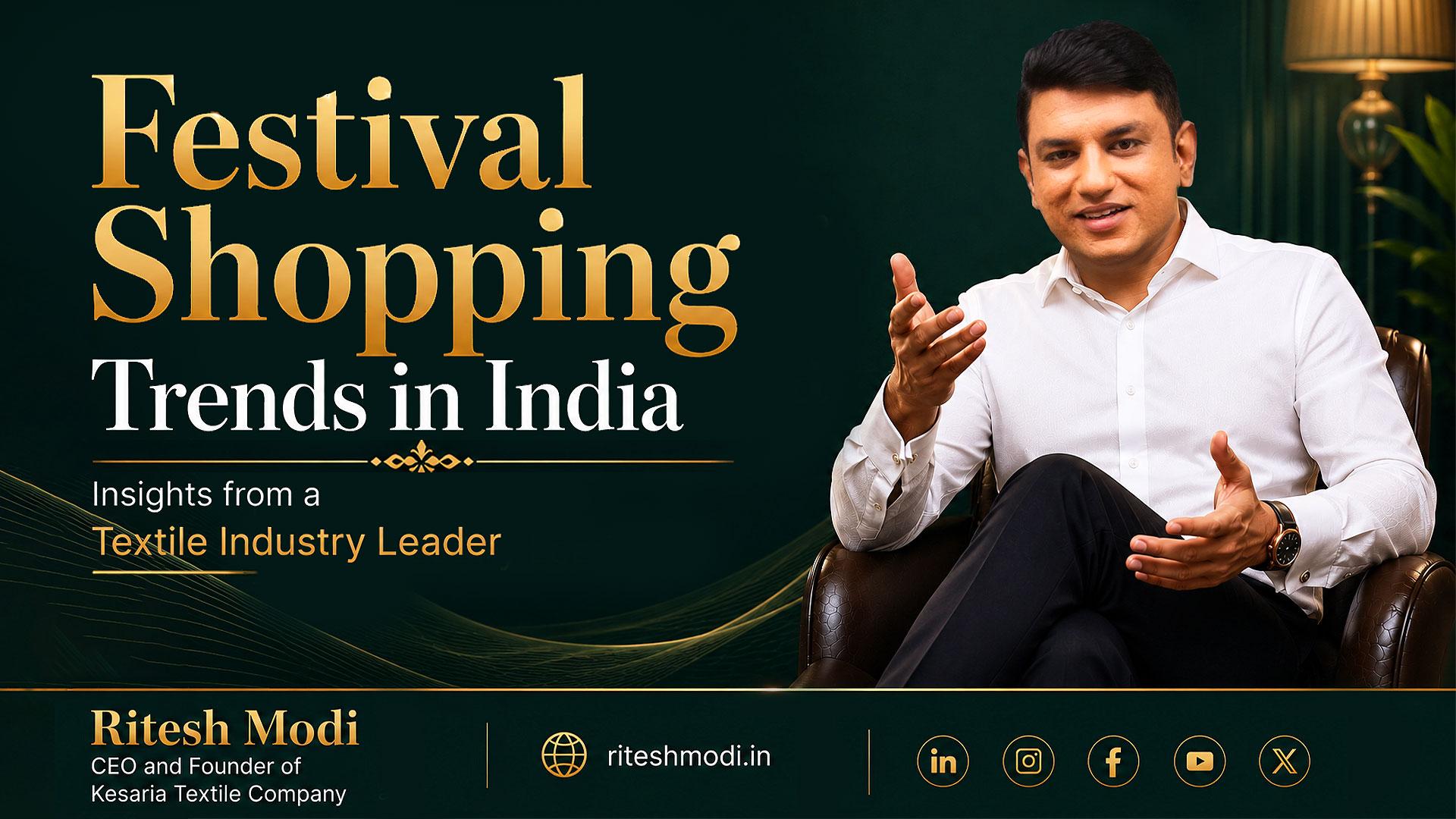
Festival Shopping Trends in India Insights from a Textile Industry Leader
Discover the latest festival shopping trends in India with expert insights from Ritesh Modi, CEO & Founder of Kesaria Textile Company. Explore fashion trends, consumer behaviour, and the future of India's textile industry. Festival shopping guide by Textile, entrepreneurs, businessman, textile man and textile king of Surat India. How Festival Shopping is Reshaping India's Fashion and Textile Industry. India's festival season is much more than a period of celebration—it is the most influential time for the country's fashion and textile industry. Every year, festivals such as Raksha Bandhan, Ganesh Chaturthi, Navratri festival, Durga Puja, Dussehra, Karva Chauth, Diwali, Christmas, Eid, and the wedding season inspire wide of families to invest in new trends clothing. This seasonal demand drives significant growth for textile manufacturers, wholesalers, retailers, and clothing brands across the country. As an entrepreneur who has spent years building a textile business in Surat, I have witnessed how customer expectations have evolved from simply purchasing clothes to seeking quality, style, comfort, affordability, and a memorable shopping experience. Today's consumers are highly informed, compare products online, follow fashion trends on social media, and expect premium collections at competitive prices. Organized retail, digital commerce, and modern manufacturing have transformed the shopping journey, making fashion more accessible than ever before. Surat continues to play a vital role in this transformation by producing innovative sarees, lehengas, kurtis, salwar suits, men's wear, and kids' wear that reach every corner of India. Businesses that understand these changing consumer preferences and continuously innovate their product offerings are the ones that successfully lead the market during every festive season.
Changing Consumer Behaviour is Creating New Opportunities for the Textile Industry
The Indian consumer has changed dramatically over the past decade, and festival shopping clearly reflects this transformation. Earlier, purchasing decisions were largely driven by price, whereas today's shoppers evaluate fabric quality, craftsmanship, design, brand reputation, shopping experience, and after-sales service before making a purchase. Customers want fashionable clothing that represents their personality while offering comfort and long-lasting value. The rapid growth of smartphones, digital payments, social media platforms, and e-commerce has empowered consumers to explore thousands of fashion options before visiting a store or placing an online order. This shift has encouraged textile companies to adopt faster production cycles, introduce fresh collections more frequently, and maintain consistent quality standards throughout the year. From elegant festive sarees and designer lehengas to premium men's ethnic wear and stylish kids' collections, every category has experienced remarkable growth because of increasing fashion awareness. Organized clothing stores and franchise businesses have also become the preferred destination for shoppers who seek variety, trust, and a professional retail experience. In my experience, sustainable growth in the textile industry is achieved by understanding customer expectations, embracing innovation, maintaining product excellence, and building long-term relationships based on quality and reliability rather than focusing only on seasonal sales.
The Future of Festival Shopping in India: Innovation, Quality and Customer Trust
India's textile and apparel industry is entering an exciting phase where innovation, technology, and customer satisfaction will define future success. Festival shopping is expected to become even more dynamic as younger consumers demand modern fashion blended with traditional Indian culture. Artificial intelligence, data-driven inventory planning, personalized shopping experiences, faster manufacturing processes, and omnichannel retailing are already transforming how businesses serve customers. However, despite these technological advancements, the foundation of long-term success remains unchanged—exceptional product quality, ethical business practices, transparent pricing, and customer trust. Throughout my entrepreneurial journey at Kesaria Textile Company, I have believed that every festival presents an opportunity not only to increase business but also to strengthen relationships with customers, retailers, franchise partners, and the entire textile ecosystem. Businesses that consistently deliver value, introduce innovative designs, and maintain uncompromising quality standards will continue to lead India's growing fashion industry. As India's economy and consumer spending continue to rise, the country's festival shopping culture will create even greater opportunities for textile manufacturers, wholesalers, retailers, and entrepreneurs who are prepared to adapt, innovate, and serve customers with excellence. The future of Indian fashion belongs to organizations that combine traditional craftsmanship with modern business strategies while keeping customer satisfaction at the heart of every decision.
Top 10 FAQs – Festival Shopping Trends in India
1. Why is festival shopping so important for India's textile and fashion industry?
Festival shopping is one of the biggest revenue drivers for India's textile and apparel industry. During festivals such as Raksha Bandhan, Navratri, Durga Puja, Dussehra, Diwali, Eid, Christmas, and the wedding season, consumer spending on clothing increases significantly. Families prefer purchasing new outfits to celebrate traditions, attend social gatherings, and gift loved ones. This seasonal demand benefits textile manufacturers, wholesalers, retailers, clothing brands, and franchise businesses by generating higher sales and encouraging the launch of new fashion collections.
2. Which clothing categories experience the highest demand during the festival season?
Women's ethnic wear continues to dominate festival shopping, with sarees, lehengas, salwar suits, kurtis, and gowns remaining the most popular choices. Men's wear, including kurta pajama, sherwanis, Nehru jackets, shirts, and Indo-western outfits, also sees strong demand. In addition, kids' wear has become one of the fastest-growing segments as parents increasingly invest in premium festive clothing for children. Fashion accessories and coordinated family outfits are also becoming increasingly popular across India.
3. How has consumer behaviour changed during festival shopping in recent years?
Modern consumers are more informed and quality-conscious than ever before. Instead of focusing only on price, they compare fabric quality, design, brand reputation, comfort, durability, and customer reviews before making a purchase. Social media, fashion influencers, online shopping platforms, and digital payments have transformed buying habits. Today's shoppers expect premium collections, transparent pricing, excellent customer service, and a seamless shopping experience both online and offline.
4. Why is Surat considered one of India's leading textile hubs?
Surat is widely recognized for its large-scale textile manufacturing ecosystem, advanced production capabilities, and continuous innovation in fashion. The city produces an extensive range of sarees, lehengas, kurtis, salwar suits, dress materials, and other apparel that are supplied to retailers and wholesalers across India and international markets. Its ability to introduce fresh designs quickly while maintaining competitive pricing has made Surat a preferred sourcing destination for businesses in the fashion industry.
5. What factors influence festival shopping trends in India?
Festival shopping trends are influenced by several factors, including changing fashion preferences, social media influence, celebrity styles, rising disposable income, wedding celebrations, regional traditions, organized retail expansion, and digital commerce. Consumers are increasingly looking for stylish, comfortable, and affordable clothing that reflects both modern fashion and traditional values. These evolving preferences encourage brands to continuously introduce innovative festive collections.
6. How can clothing retailers prepare for the festive shopping season?
Retailers should begin planning several months before the festive season by analyzing customer demand, stocking the latest collections, improving inventory management, training staff, and strengthening digital marketing efforts. Maintaining product availability, offering excellent customer service, creating attractive store displays, and ensuring a smooth shopping experience are essential for maximizing festive sales. Businesses that prepare early are better positioned to meet customer expectations and achieve higher growth.
7. What role does technology play in festival shopping?
Technology has significantly transformed the way consumers discover and purchase fashion products. Customers now use search engines, social media platforms, online reviews, and e-commerce websites to research products before making buying decisions. Retailers are adopting digital payments, inventory automation, customer relationship management systems, and data-driven marketing strategies to enhance customer experiences. These innovations help businesses improve operational efficiency while offering greater convenience to shoppers.
8. Why are organized clothing brands and franchise stores becoming more popular?
Consumers increasingly prefer organized clothing brands because they offer consistent product quality, transparent pricing, a wide variety of collections, professional customer service, and a trusted shopping environment. Franchise stores also provide standardized retail experiences across different cities, allowing customers to shop with confidence. This growing trust in organized retail has contributed to the rapid expansion of clothing franchise businesses throughout India.
9. What opportunities does the festival season create for entrepreneurs in the textile industry?
The festival season presents excellent opportunities for entrepreneurs, wholesalers, retailers, and franchise investors to expand their businesses. Higher consumer demand allows companies to introduce new product collections, increase market reach, strengthen customer relationships, and improve brand visibility. Entrepreneurs who focus on quality, innovation, efficient supply chain management, and customer satisfaction can build sustainable growth and long-term success in the competitive textile industry.
10. What are Ritesh Modi's insights on the future of festival shopping in India?
According to Ritesh Modi, CEO and Founder of Kesaria Textile Company, the future of festival shopping in India will be driven by innovation, customer trust, organized retail, and high-quality fashion. As consumer expectations continue to evolve, businesses must focus on premium products, modern manufacturing, digital transformation, and exceptional customer experiences. Companies that successfully combine traditional craftsmanship with contemporary fashion trends and ethical business practices will be well-positioned for long-term growth in India's expanding textile and apparel industry.